Skip to content

Resources · Comparison

EALM vs. CMMS: What's the Difference, and Which Do You Need?

A CMMS handles maintenance. EALM covers the full asset lifecycle — including finance, audit, and hardware. Here's how to know which you need.

Direct answer

The difference in one sentence

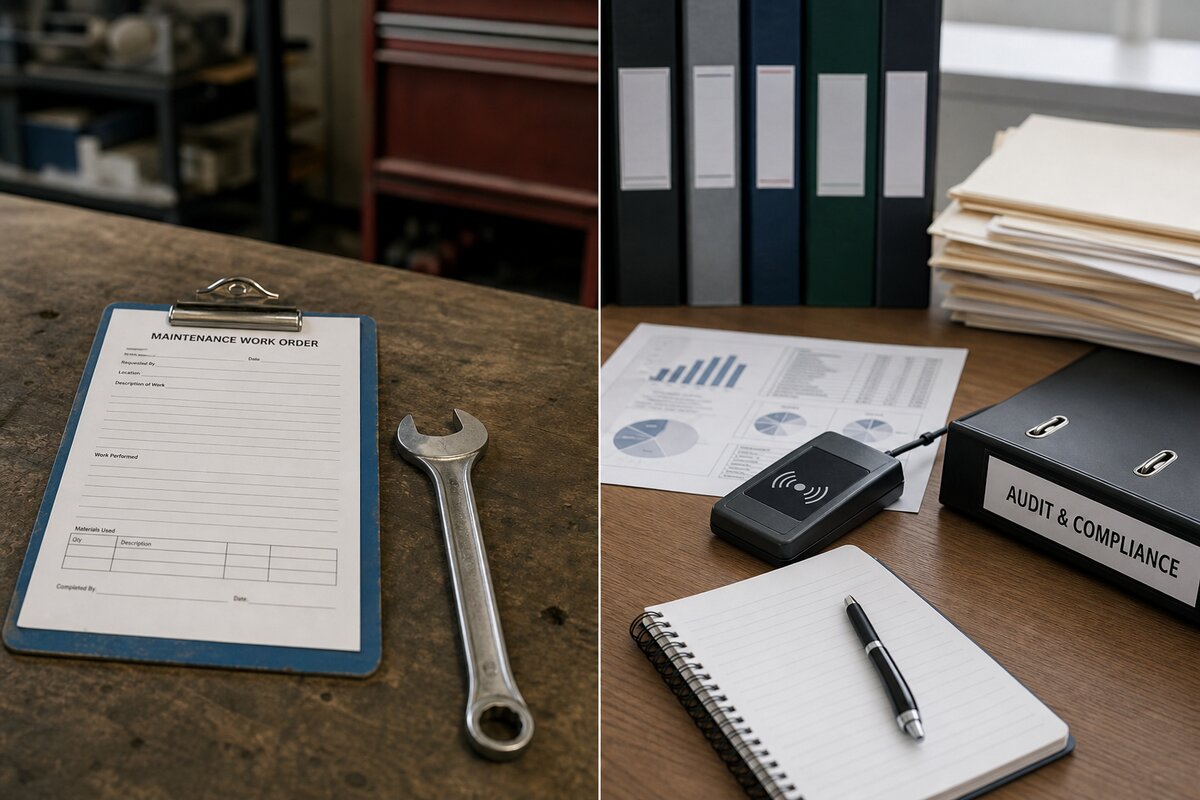
Maintenance operations contrasted with full lifecycle asset control across teams

A CMMS runs maintenance. EALM runs the lifecycle — so ops, finance, IT, and audit stop rebuilding the asset story in separate tools.

If your buying committee only needs work orders and PM schedules, a CMMS may be enough. If depreciation, custody, hardware reads, and audit reconciliation also matter, you are already past maintenance-only scope.
Definitions

What each term actually means

Same physical assets — different breadth of control. Use these definitions before you compare feature grids.

CMMS

Computerised Maintenance Management

Schedules, assigns, and closes maintenance work. Strong at uptime and work-order history — usually silent on finance-grade context, full custody, and procure-to-dispose control.

EALM

Enterprise Asset Lifecycle Management

One asset register from procurement through disposal. Maintenance sits inside a broader trail that also carries custody, depreciation, hardware readiness, and audit verification.

Side-by-side

Capability comparison

Both can keep equipment running. EALM is the wider register — maintenance plus the contexts finance and audit actually ask for.

Capability
CMMS
EALM
Maintenance & work orders
Yes
Yes
Full lifecycle (procure → dispose)
No
Yes
Financial depreciation & IFRS 16
Limited
Yes
Custody & assignment history
Limited
Yes
Hardware / RFID (vendor-agnostic)
Rare
Yes
Audit reconciliation
Basic
Manifest-based
Shared ops + finance + audit view
No
Yes

Scope

What a CMMS covers — and what EALM adds

Start with maintenance scope, then the lifecycle layers a CMMS rarely owns.

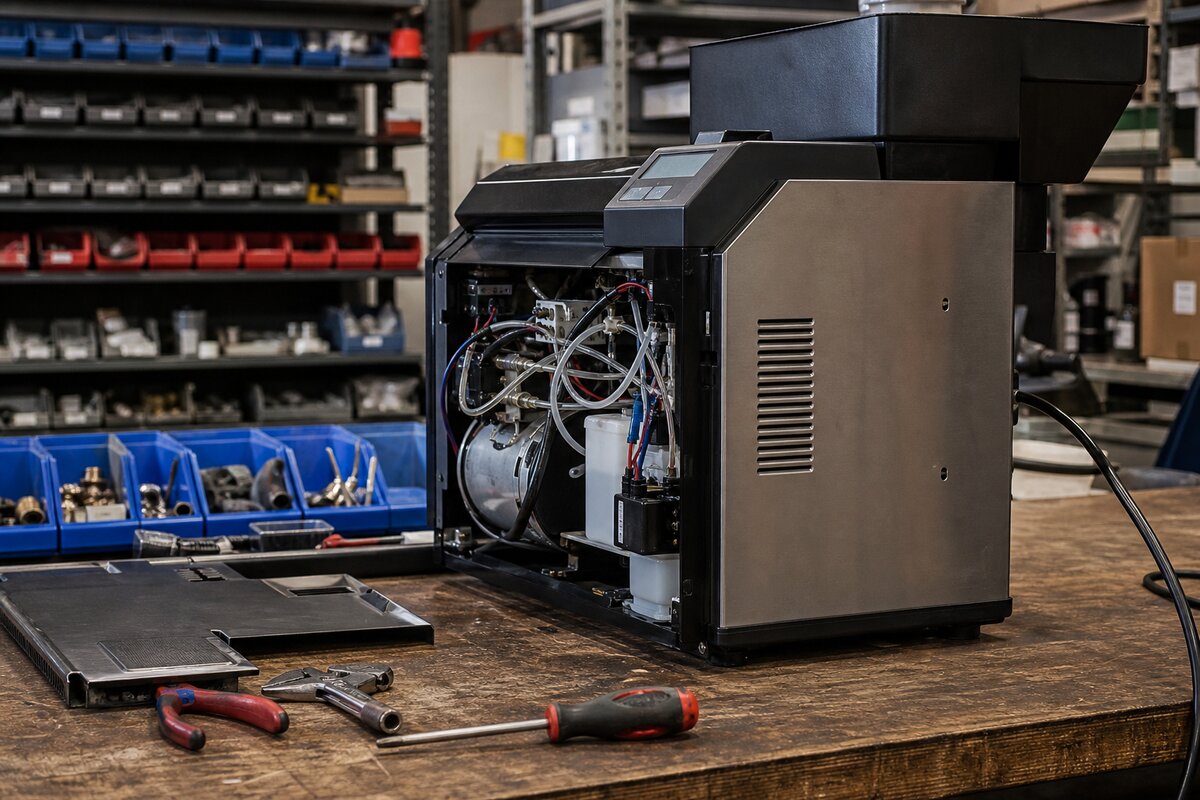
Maintenance workshop bench with tools and equipment open for service

What a CMMS covers

Maintenance depth — by design

Work requests, preventive schedules, technician assignment, spare parts on the job, and close-out history. That is valuable work. It is also where most CMMS products stop.

  • Work order intake through close
  • Preventive and corrective schedules
  • Technician and site assignment for repairs
  • Service history tied to the asset for maintenance teams

Enterprise facilities environment representing full lifecycle asset operations

What EALM adds

Lifecycle breadth on the same record

Procurement intake, custody as people move, depreciation and lease context, hardware reads, and verification that closes against the live register — without exporting into a second system of truth.

  • Procure-to-dispose on one asset trail
  • Finance-grade depreciation and lease awareness
  • Vendor-agnostic hardware / RFID readiness
  • Audit reconciliation against presence and condition
Decision

How to decide which you need

Start from the job to be done — not the acronym. Breadth of the lifecycle is the tell.

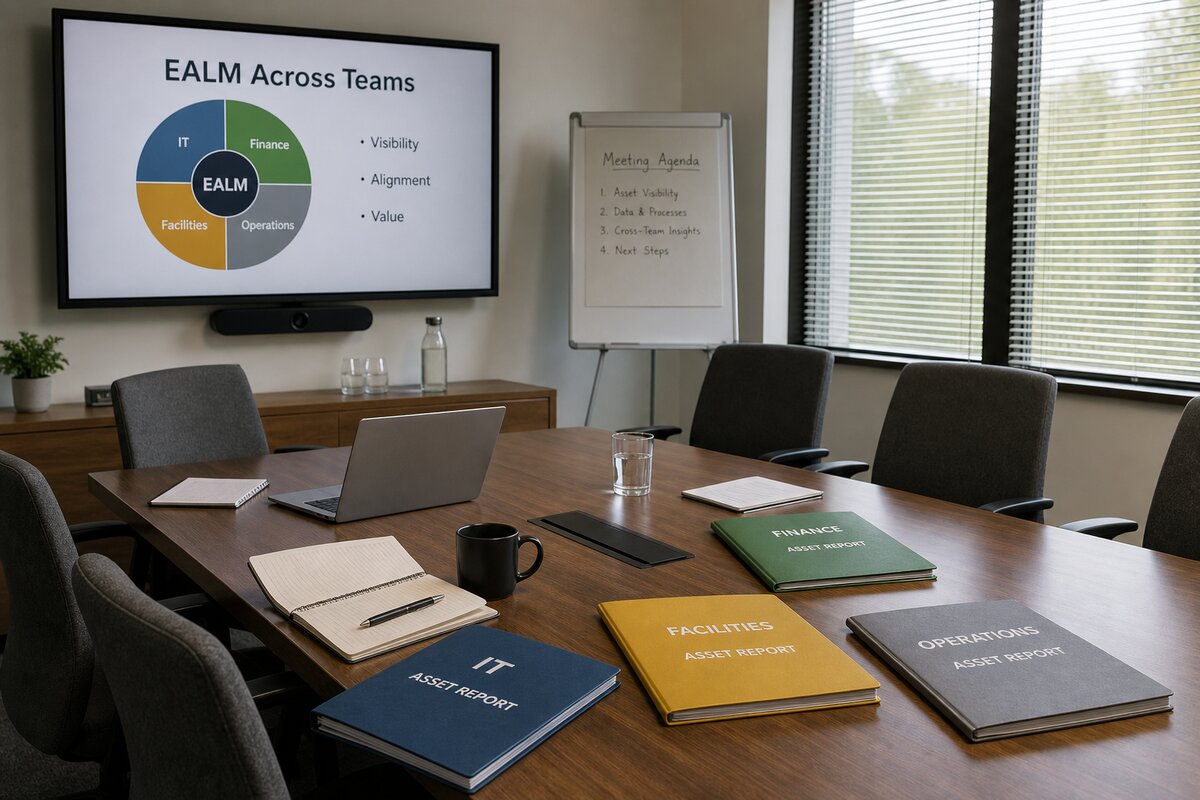
Cross-functional team reviewing asset decisions across operations and finance

A CMMS is enough when

  • Your primary pain is work orders and PM compliance
  • Finance and audit already trust adjacent systems
  • You do not need hardware reads on the same register
  • One maintenance team owns the buying decision alone

You need EALM when

  • Depreciation, leases, or IFRS context must sit on the asset
  • Audit asks for presence and condition against a live trail
  • Custody, sites, and assignments change faster than spreadsheets
  • Ops, finance, IT, and audit share one buying committee

On AssetZA

Maintenance inside the lifecycle — not beside it

You do not always have to pick a silo. AssetZA is built as EALM with CMMS-grade maintenance inside the same register — so work orders and lifecycle context stay on one asset trail.

Frequently asked questions

What is a CMMS?

A Computerised Maintenance Management System schedules, assigns, and closes maintenance work on equipment. It is built for work orders and uptime — not for finance-grade depreciation, full custody history, or procure-to-dispose control on one register.

What is the difference between EALM and CMMS?

CMMS is maintenance-scoped. EALM (Enterprise Asset Lifecycle Management) keeps the same asset on one trail from procurement through disposal — including custody, maintenance, finance, audit verification, and retirement. Maintenance still matters; it sits inside a broader lifecycle.

Do I need a CMMS or an EALM platform?

Choose a CMMS if maintenance scheduling alone is the job. Choose EALM when finance, audit, hardware tracking, multi-site custody, or full lifecycle visibility also matter — or when you have outgrown a maintenance-only tool.

Can EALM replace my CMMS?

Often yes for teams that want one register. AssetZA includes CMMS-grade maintenance and work orders inside the EALM platform, so you do not have to keep a separate maintenance silo for day-to-day work.

See the difference on AssetZA

Book a short demo.

Scroll to Top