Library · Guide
Audit and reconciliation readiness
How physical verification and financial alignment stay connected when custody and ledger share one trail.
GuideComplianceAll guides
Key takeaways
What to remember
- Audit season gets expensive when floor counts and finance exports are prepared in parallel.
- Custody history bridges what teams see on site and what the ledger holds.
- Reconciliation should accumulate through operations — not only through a once-a-year project.
How physical verification and financial alignment stay connected when custody and ledger share one trail.
Where the scramble comes from
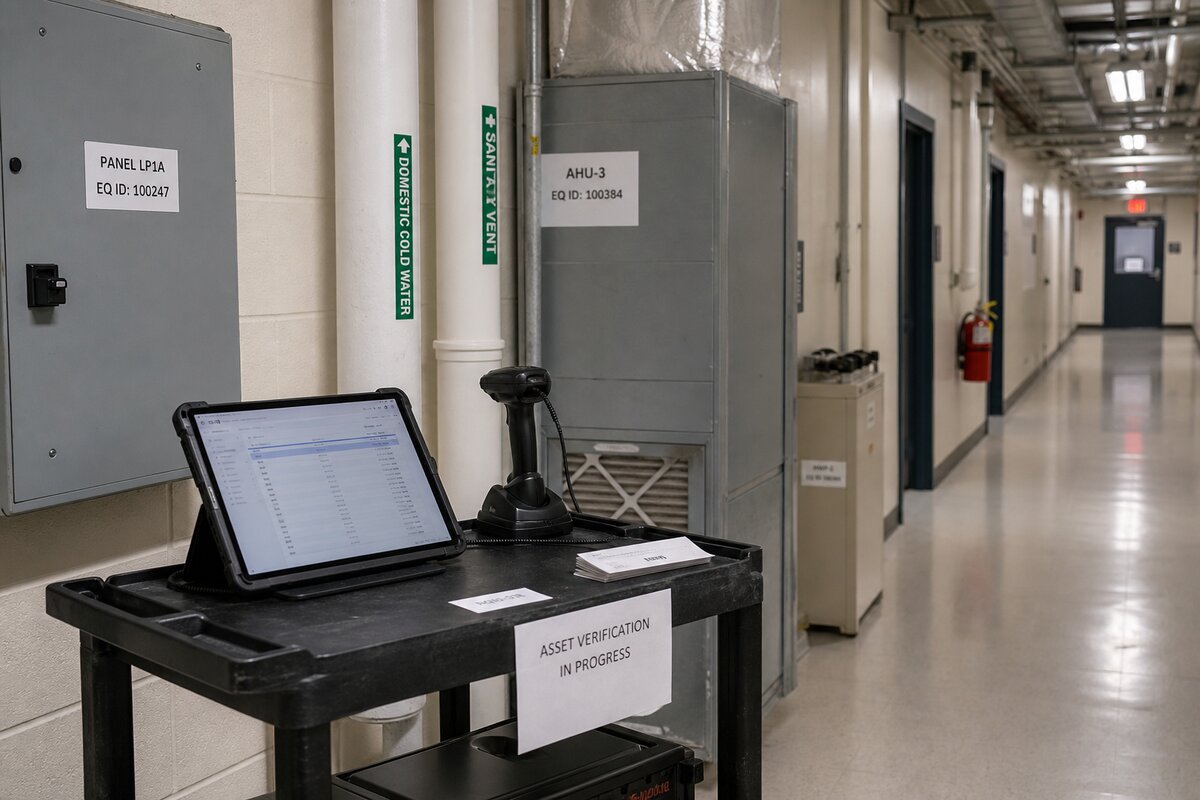
Physical verification and financial reconciliation are often separate projects: one team walks the floor, another exports the ledger, and a third explains the delta. The cost is not laziness — it is systems that never shared custody and cost on the same identity.
Readiness means those projects shrink because daily work already wrote the evidence auditors will ask for.
Readiness checklist
Use this evergreen checklist to see whether audit is a check against living evidence — or a rebuild:
- Every in-scope asset has a durable ID shared by operations and finance
- Location and custodian updates happen as part of moves — not as a pre-audit cleanup
- Last-verified dates and exception statuses are visible without a side spreadsheet
- Disposal and transfer events close the trail instead of leaving orphan ledger lines
- Sampling plans can start from the live register, not from a freeze-file archaeology project
Exception types to name early
Not every delta is the same problem. Naming exception types keeps leadership from treating every miss as a crisis:
- Missing on floor — register says present; verification does not find it
- Found not on register — physical asset with no durable identity in the system of record
- Identity collision — two records describing one thing, or one record describing two
- Stale custody — holder or site changed in reality but not on the register
- Financial orphan — ledger line without an operational twin (or the reverse)
Cadence over campaigns
Continuous or periodic verification against a shared register beats a single year-end campaign. When location, owner, and financial attributes update through daily work, exceptions narrow and sampling improves. Product workflows that operationalize this live on the Audit & Reconciliation platform page — this Library guide stays the readiness reference.
Related on AssetZA
More guides
Keep exploring the Library


Frequently asked questions
What does audit readiness mean here?
It means physical verification and financial reconciliation can check a living register — custody, location, and cost on one identity — instead of assembling parallel exports under deadline pressure.
How is this different from Insights articles on audit?
Insights is dated commentary. This Library guide is the evergreen readiness checklist and exception framing you can reuse across cycles.
Where do I see the product capability?
Open Audit & Reconciliation on the platform for the product twin of this guide.